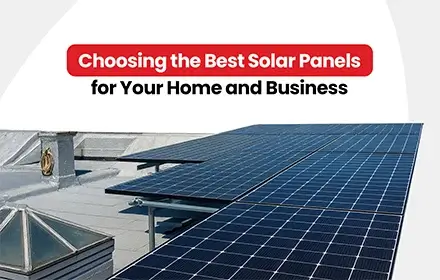
Recent updates in solar technology have developed efficient and durable solar panels, so they are safe options for homes and businesses to maximize energy generation. In this post, we cover two types of solar panel technology: Mono PERC Half-Cut solar PV Modules geometries (monofacial and bifacial), and TOPCon Dual-Glass solar panels. We will discuss their features, benefits, and other factors to help you choose the technology that works best for your energy needs.
Understanding Your Energy Needs
Evaluate Energy Consumption
Go over your electricity bills to determine your average month to month use of electricity in kilowatt hours (kWh). A standard home has a system KPI between 3–10 kW. A business typically has needs ranging from 10–100 kW and larger in some cases depending on individual operations.
Plan for Future Expansion
Are you looking to add direct current electric vehicles in the near future? Will your operations be growing or have you considered other expansion? If you think your energy needs will be increasing, consider mono-PERC dual-glass panels to help downsize the number of panels you will need, which will also leave you with space for potential solar expansion down the road.
Latest Solar Panel Technologies
Mono PERC Half-Cut Panels (Monofacial and Bifacial)
Overview
Mono PERC (Passivated Emitter and Rear Cell) Half-Cut panels use monocrystalline cells with a passivation layer to improve efficiencies while preventing electron recombination. Half-Cut cells are cut into two independent sections for increased performance. Options are:
Monofacial: the cells only absorb sunlight on the front side.
Bifacial: the cells absorb sunlight on both sides, benefiting from reflected light.
Key Features
- Efficiency: Monofacial Mono PERC Half-Cut panels have efficiencies of 21-23%, bifacial panels can achieve up to 25% by harnessing the contributions from the rear side.
- Power Output: between 400-580W for monofacial and bifacial with rear side gain up to 700W.
- Half-Cut Technology: laser cutting the cells reduces the electrical resistance loss by improving shade performance and impact tolerances; reducing thermal black-cells and improving thermal regulation.
- Bifacial: Bifacial models can generate 11 to 30% more energy, in contexts of reflective environments i.e., white roofs, gravel, etc.
- Durability: tempered glass and solid frames provide support against wind (2400 Pa) and snow (5400 Pa); bifacial panels are often tested and built in dual glass, for increased UV protection and longer operating lifetimes.
- Temperature Coefficient: approximately -0.34%/°C for P-type cells in hot climates.
- Warranty: the product usually is 10-12 years, and the performance of 25-30 years (80-87.4% of the max initial output).
Pros
- Superior efficiency and bifaciality maximize energy yield.
- Excellent performance in low-light and high-temperature conditions.
- Long lifespan and low degradation ensure reliable long-term output.
- Compatible with existing PERC production lines, increasing availability.
- Dual-glass design enhances durability and reduces PID risk.
Cons
- Higher upfront cost due to complex manufacturing and more silver usage.
- Requires elevated mounting and reflective surfaces for optimal bifacial performance.
- Limited availability compared to Mono PERC in some markets.
Best Applications
- High-efficiency residential rooftops with reflective surfaces.
- Commercial and utility-scale projects, especially with solar trackers.
- Hot or low-light environments where N-type cells excel.
Key Considerations for Choosing Panels
Efficiency and Space
In terms of efficiency (21%–25%), Mono PERC Half-Cut and TOPCon Solar panels perform well, especially where roofs have limited space. Where TOPCon panels gain efficiency and have bifaciality, mono PERC is more common and cheaper.
Cost vs. Performance
- Mono PERC Half-Cut Solar Panels: The monofacial versions are less expensive than bifacial ones, on average; in addition to efficiency being the most critical in a reflective area, bifacial panels produce a better return. The range for bifacial installation is ₹4,79,271 to ₹9,58,542, on average, for a bifacial installation.
- TOPCon Dual-Glass: These will have higher upfront costs since they have better technology, but the payback is faster because of efficiency applications, or a reflective site.
Roof and Site Conditions
- Mono PERC Half-Cut Solar Panels: The monofacial panels will work on any roof or surface area; bifacial versions will require reflective surfaces reflecting on the underside (like shingles or gravel would need to be elevated above the mounting area about 0.5 to 1m height for getting the most from the rear-side gain.
- TOPCon Dual-Glass: These require reflective surfaces (like white roofs or gravel roofs) to make the most from the bifacial features, in addition to elevated heights for maximum reflections. Mounts of 0.5m to 1m height will work best. Trackers are another option that can increase energy access by generating up to 27% more energy.
Durability and Warranty
Both technologies have a performance warranty of 25 to 30 years (for both), and have excellent structural integrity and design. Generally speaking, TOPCon N-type solar panels have less degradation (relative to PERC modules) and would not have LID or LeTID "Lethargy". Therefore, TOPCon technology would have more durability over time.
Installation Requirements
- Mono PERC Half-Cut: Monofacial panels can utilize standard frames, bifacial panels must use open frames to prevent truly “half-cut” features from working if there’s any shading on the back of the panels.
- TOPCon Dual-Glass: Requires elevated mounting often with open frame mounting to yield any bifacial performance. Standard mounts will work as tracking is possible without mounting frames, but bifacial performance increased with tracking mounts.
Local Availability and Incentives
In India, brands like Waaree, Adani and Loom Solar commonly provide Mono PERC panels. The TOPCon panels are available but there are less options. Be sure to consult local government subsidies available (like PM Suryaghar Yojana) and confirm compliance with local building codes.
Steps to Choose the Right Panels
- Assess your electricity needs: calculate your electricity use and potential future needs.
- Evaluate your site: roof space, sun orientation, reflective surfaces, or shading
- Set a budget: weigh price versus eventual efficiency and ROI
- Compare technologies: Mono PERC will be more cost-efficient; TOPCon will yield the highest performance
- Select reputable brands: certified manufacturers with warranties
- Hire certified installers: bifacial or TOPCon requires significant expertise
- Research available incentives: government subsidies and tax incentives are common.
Why It Matters
Choosing the right solar panel technology makes the difference between maximizing energy production and possibly incurring unnecessary costs. For example, Mono PERC Half-Cut technology is an excellent trade-off between cost and efficiency performance, while TOPCon Dual-Glass technology is great performance technology for projects requiring maximum performance. In India where solar technology is gaining fast popularity, the right chosen technology should produce 6,000–10,000 kWh of energy from a 5 kW system annually, more than enough to meet most homeowner or small business requirements. However, bad selection decisions can happen in the solar industry as with poor inverter suitability and mounting options that waste efficiency and impact life expectancy.
Conclusion
For homes and businesses, Mono PERC Half-Cut technology (monofacial or bifacial solar panels) is the best value for a reliable source of produced energy at low cost where reflective surfaces do not exist. TOPCon solar panels represent the best performance for the maximum output potential in very successful energy-performing, efficiency-enhancing locations as well as reflecting intrusive light energy - all while still being durable and manufactured for high performance into the future.
Determine your site assessments, budgets, and energy performance expectations and consult certified installers to ensure you set them up correctly. There is no wrong in your decision - it's just the opposite - making the best of India's great heat source to generate renewable energy at no cost.
Frequently Asked Question
Which are the best solar panels for homes in India?
▾
The best solar panels for homes in India are Mono PERC Half-Cut monofacial panels due to their affordability, efficiency (21–23%), and suitability for limited roof space.
Are bifacial solar panels good for businesses?
▾
Yes, bifacial solar panels are ideal for businesses with reflective rooftops or open spaces, as they can generate 11–30% more energy, improving ROI and long-term savings.
What is the difference between Mono PERC and TOPCon solar panels?
▾
Mono PERC solar panels are cost-effective and widely available, while TOPCon Dual-Glass panels offer higher efficiency (up to 30%), lower degradation, and better durability.
Does the PM Suryaghar Yojana solar subsidy apply to Mono PERC and TOPCon panels?
▾
Yes, the PM Suryaghar Yojana subsidy in India supports both Mono PERC and TOPCon solar panel installations, helping reduce upfront costs for homes and businesses.