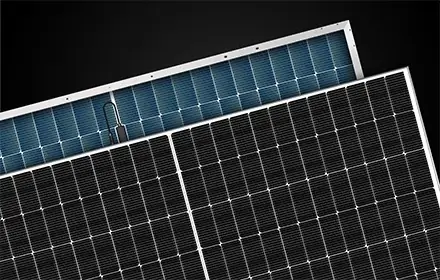
Bifacial solar panels are becoming increasingly popular in India in both residential and commercial settings because they can produce up to 25% more energy than conventional monofacial solar panels. As they produce energy from the front and the back, bifacial panels have several excellent benefits. However, in order to get the most from bifacial solar, it is important to plan thoroughly and install correctly. In this guide, we will look at some factors to consider for bifacial solar panel efficiency, as well as some useful tips to maximize the power output.
Many factors will impact the performance of bifacial solar panels, most notably the rear-side light capture. With an understanding of these factors, it will be easier to make the most of the energy yield.
The conditions surrounding the panels are an important consideration with regard to light capture on the rear side of the panels. High-albedo surfaces, like white roofs or gravel, will reflect a higher amount of light onto the rear of the panels, while low-albedo surfaces, like asphalt or shaded surfaces, will decrease this effect and subsequently reduce performance.
Panels that are mounted too low to the ground or roof will not receive as much reflected light on the rear side of the panel. Conventional mounting structures also consist of horizontal purlins, which can also cast shadows and limit energy output and may even create hotspots that can damage a panel over time.
Objects such as trees, buildings, or other obstructions often block sunlight, which could be particularly relevant for the back side. The effects of shading don't have to be entirely blocked by an object; even partial shading can still significantly reduce power output and increase long-term degradation of the panels.
Mounting systems built for monofacial panels often interfere with the back side of bifacial panels, which reduces the amount of light being captured. Purlins, or back rails, and poorly placed supports can also obstruct light and thus negatively impact bifacial module performance.
Row spacing, which keeps panels tightly spaced together, restricts the path of the reflected sunlight to hit the ground and bounce back to the panel. Tight row spacing also exposes the modules to more inter-row shading,which reduces performance.
Non-reflective surfaces, or dirty surfaces leading to a lower albedo, under the panels produce lower rear-side energy gains due to the lower quality reflected light. You may also further reduce the quality of reflection by letting organic or non-organic debris build up on the surface underneath the panels.
Poor quality parts, such as cheap iron pipes for mounting or cables and inverters that are too small and not rated to accept the increased power output of bifacial panels, will cause energy losses, and possibly, even failure of the overall solar PV system.
Tilt angles of the solar panel are very important to capture bags sunlight; if the angle is incorrect or doesn't track the sun's angular path over time, this could lead to more limited sunlight captured. Also, reflected light on the back side of the photovoltaic module depends upon the amount of sunlight in the sky and time of year and the historical sun path relative to where the installation is located.
Any dust, dirt, or debris on the panels or reflective surfaces pictured in your array will diminish performance. If the light is uneven around your array, it may create hot spots that could negatively affect performance if not fixed.
To maximize the energy output of bifacial solar panels, consider these practical strategies:
Install the panels over a reflective surface or high-albedo surface (i.e. white rooftops, gravel, or low vegetation). The more reflecting surface that is installed under and near the back of the panel, the more light and energy produced from the rear, so try to avoid darker or shaded areas where possible, to maximize reflectivity.
Ensure the panels are resting at least 0.5–1 meter above the building or ground surface to increase back-side exposure to any reflected light. Studies have indicated that elevating a bifacial solar panel to higher elevations can significantly increase energy production as long as the structure is capable of withstanding wind and seismic loads.
Select a mounting system where the back side of the panel will not be shaded. Select mounting criteria that place mounting supports at the module edge rather than under the module cells, leaving the back of the module clear of obstructions. This increases the cost of the mounting system by 40–45%, however, for bifacial solar arrays, the mounting system cost represented only 6–8% of the total project and resulted in a significant increase in energy yield over the project term.
Keep Row Spacing of 2.5 Meters to Capture Ground Reflected Light
Maintain a least row spacing of 2.5 meters to allow available light to reach the ground and reflect back to your panels. Adjust the spacing according to your local latitude and sun angles for the best outcomes.
If available, use single axis trackers to adjust all the panels tilt angle throughout the day to create a similar product to following the sun's path. You will gain the capacity to use both the front- and rear-side to capture light which improves output by as much as 25%. Although trackers add cost to your facility, the cumulative energy gains could total more than the upfront cost.
Utilize modeling software to determine shading caused by trees, buildings, and other items. Amending your layout can help to ensure you don't shade your panels and much thought needs to go into making sure the rear side of all your panels are unobstructed.
Regardless of your efficiency increase, you can always increase the spread of reflectivity by painting surfaces (walls, rails, or ground) that surround your panels white or putting down reflective materials (e.g., gravel) under the panels. Efficient diffuse reflectors can increase the efficiency of your panels by as much as 11–18%.
Taking the time to plan your mounting systems and purchase good-quality products will save you money in the long run. Avoid cheap products, such as welded iron pipes for mounts and cables adequate for the outputs (such as 6 sq mm or bigger), and use inverters that are rated to assure you can handle the increase in power output of your panels without losing any power capacity—generally rated from 750–800W peak.
When it comes to optimizing the tilt angle, it is important to know your local sunlight patterns. Using less conventional tools (albedometers) to measure rear-side light contribution would help you to aug in maximizing the energy production by modifying the elevation and orientation.
Regular maintenance is very important and you should seek to clean your panels and reflective surfaces to get rid of debris. Also, utilizing infrared thermography or thermal imaging, you can detect and address hotspots sooner rather than later, preventing damage to the module and continuing performance.
When making the installation, do not forget to follow the codes and standards for your design to maintain safety standards related to wind rating for snow changes and fire risk. Also, verify that your electrical components, such as inverters and transformers, will service or meet the bifacial panel output requirements.
Select panels that have a UV-resistant or transparent backsheet product to see maximum light. It may also be worth looking out for bifacial cell technology that has levels of transparency with respect to absorbing light from ideally both sides of the panel.
When installed and designed correctly, bifacial solar panels can provide 5–10% greater energy generation than monofacial modules, but if the wrong decisions are made (e.g., outdated mounting systems, not considering albedo, etc.), bifacial panels will not perform any better than monofacial options.
In India, many residential rooftop installers are making these mistakes, which will impact performance in the long run. In many cases, it is better to have an optimized setup that can add some additional cost to the installation (e.g., ₹10,000 for a 3–5 kW system) but will provide additional energy generation.
For example, bifacial panels with trackers and reflective surfaces and modern inverters and cables, which have been well-engineered, are consistently superior to systems that were not all optimized. TOPCon bifacial modules are the current dominant product in the industry; however, this product will only realize its full potential when it has been engineered correctly.
To maximize your bifacial solar panel installation outcome, pay attention to elevation, reflectivity, and the quality of the fixture. Ensure minimal shading, utilize some sort of open mounting structure, and provide ongoing maintenance for your bifacial solar panel system. If you consider these best practices, you will maximize your energy production outcome and thus get a return on your investment. Although regulatory standards for rooftop installations could have performed better, proper application will lead you to success.
Orient Solar is one of India’s leading solar companies, manufacturing a variety of high-efficiency Mono PERC half-cut PV modules in monofacial and bifacial categories. Orient Solar innovatively manufactures superior quality solar solutions, whether residential, commercial, or industrial, including Domestic Content Requirement (DCR) compliant modules, in support of government-backed projects.
Frequently Asked Question
Request A Quote