As India accelerates its shift toward clean energy, many households and businesses are exploring solar power to cut electricity bills and reduce their carbon footprint. But a common question arises: Should you choose an off-grid or an on-grid solar system?
Understanding the difference between off-grid and on-grid solar systems is key to selecting the best solution for your energy needs, lifestyle, and location. In this blog, we’ll explore how each system works, their pros and cons, and which one might be right for you.
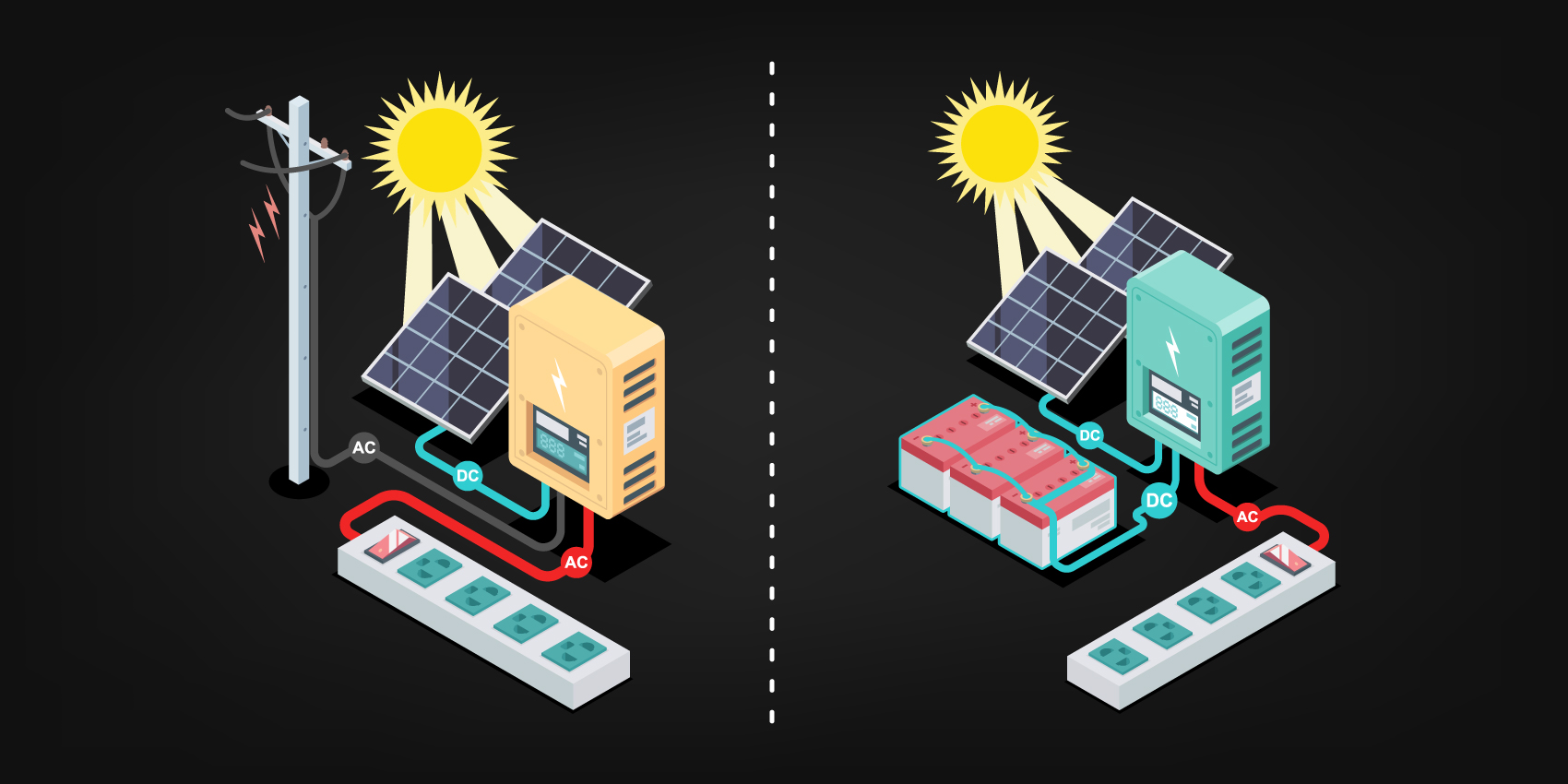
An on-grid solar system, also known as a grid-tied solar system, is directly connected to your local electricity grid. It is the most commonly used system in urban areas.
You can use solar power when the sun is out and pull electricity from the grid at night or during low generation periods.
If you generate more electricity than you consume, the excess energy can be sent back to the grid. This is known as net metering, and it helps you earn credits to reduce your energy bills.
On-grid systems are usually more affordable upfront because they do not require battery storage.
Installation is relatively simple and cost-effective.
An on-grid solar system is ideal for homes and businesses in cities or towns with reliable electricity supply and the desire to reduce electricity bills over time.
An off-grid solar system operates independently of the utility grid. It is designed to generate, store, and supply all the electricity a home or building needs—without any external power source.
They are perfect for remote or rural areas where grid connectivity is unavailable or unreliable.
These systems include battery storage, so you can store excess solar energy for use at night or on cloudy days.
Off-grid systems provide complete energy independence and protection from power cuts.
Though the initial cost is higher due to battery and storage requirements, the long-term benefits include total control over your power supply.
If you're in a location where the grid is inaccessible or unreliable, or if you're seeking full energy independence, an off-grid system is the solution for you.
The most significant difference between on-grid and off-grid systems is their connection to the power grid.
On-grid solar systems remain connected to the local utility network and rely on it as a backup.
Off-grid systems are fully independent and do not rely on external electricity.
On-grid systems typically do not include batteries, as the grid serves as backup.
Off-grid systems must include batteries to store energy and supply it when sunlight is unavailable.
In an on-grid system, solar power is used during the day. At night, power is drawn from the grid. However, during power cuts, the system shuts down unless a hybrid inverter is installed.
An off-grid system provides uninterrupted power, making it ideal for areas with frequent outages.
On-grid systems are more affordable to install and maintain due to the lack of battery storage.
Off-grid systems have higher upfront costs due to batteries, charge controllers, and larger inverter setups, but offer complete autonomy.
On-grid systems allow you to save money through net metering and reduced electricity bills.
Off-grid systems eliminate monthly bills entirely but don’t offer grid-based incentives.
Choosing between an on-grid and off-grid system depends on your location, energy needs, and financial goals.
You live in an area with stable electricity.
You want to reduce your electricity bill using solar power.
You prefer a system that’s easier and less expensive to install.
You're interested in earning through net metering credits.
You live in a remote location with no grid access.
You want full control over your electricity supply.
You face frequent power outages.
You're ready to invest in a self-sustaining system.
For users looking for the best of both worlds, a hybrid solar system may be the ideal choice. Hybrid systems combine on-grid connectivity with battery backup, offering both savings and power security.
At Orient Solar, we provide high-performance solar solutions customized to your needs. As one of the leading solar panel manufacturers in India, we offer:
Advanced Topcon solar panels with high efficiency.
Smart hybrid solar inverters with MPPT technology.
Customized solutions for on-grid, off-grid, and hybrid solar systems.
End-to-end EPC services including installation and maintenance.
Support for residential, commercial, and industrial applications.
We help you make the right solar investment—whether you're in a metro city or a remote village.
The difference between on-grid and off-grid solar systems lies in their connectivity, energy independence, and cost structure. On-grid systems offer financial savings and easy installation, while off-grid systems provide autonomy and energy security.
If you're wondering which is better: off-grid or on-grid solar system, it comes down to your lifestyle, location, and long-term energy goals.
Whether you're starting small or going fully solar, Orient Solar can guide you toward a smarter, greener future. Let us help you harness the sun for a reliable, sustainable energy solution tailored to your needs.
Frequently Asked Question
Request A Quote