As India’s energy demand grows and electricity prices rise, more people are seeking independent and sustainable power alternatives. One of the most powerful solutions is the off-grid solar system—a setup that allows homes, businesses, farms, and institutions to generate and use their own electricity without relying on the main utility grid. This system is especially useful in remote or rural areas where access to the grid is limited or non-existent. But what exactly is an off-grid solar system, how does it work, and is it right for your needs?
This guide will walk you through everything you need to know—from components and benefits to installation tips—so you can make an informed decision for your energy future.
An off-grid solar system, also known as a stand-alone solar power system, is a self-sustaining energy setup that generates electricity using solar panels and stores it in batteries for later use. Unlike on-grid systems, off-grid systems are not connected to the public electricity supply, making them ideal for locations without reliable grid access or for users looking for full energy independence.
These systems allow you to power your home or business using renewable energy, reducing reliance on fossil fuels and protecting you from rising electricity tariffs.
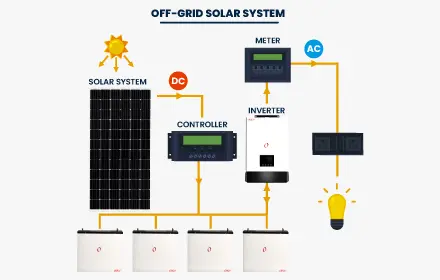
An off-grid solar system operates through the coordinated function of several key components:
Capture sunlight and convert it into direct current (DC) electricity.
Regulates the flow of electricity from the panels to the battery bank, preventing overcharging and ensuring efficient charging cycles.
Stores excess electricity generated during the day so that power is available at night or during cloudy weather.
Converts stored DC electricity into alternating current (AC), which is used by most household and industrial appliances.
Provides additional energy in case of prolonged periods of low sunlight or high energy demand.
When the solar panels generate electricity, it is first used to meet your immediate power needs. Any surplus is stored in the battery bank. At night or during power-hungry periods, the system draws on stored energy to keep everything running.
Off-grid systems offer several important benefits, especially in the Indian context:
Avoid reliance on state electricity boards and inconsistent power supply, especially in rural or disaster-prone regions.
Although the initial setup can be higher, off-grid systems eliminate monthly electricity bills, offering significant savings over the system's lifespan.
Generate clean, renewable power and significantly reduce your carbon footprint. Every kilowatt-hour from solar means fewer fossil fuels burned.
Orient Solar offers custom-designed solutions that match your load requirements—whether it’s a small house, large farm, or community building.
Ideal for hilly regions, islands, farms, and villages where grid extension is not feasible.
Battery backups and optional generators ensure that you're never without electricity—even in monsoons or extended cloudy days.
Off-grid solar systems are versatile and adaptable, making them suitable for a wide range of applications:
Perfect for rural homes and eco-conscious urban dwellings. Homeowners can enjoy continuous electricity without grid dependency, even during blackouts.
In off-grid locations, uninterrupted power is essential for equipment, lighting, and connectivity. Off-grid solar ensures these vital services can operate smoothly.
From solar-powered irrigation systems to lighting and cold storage, off-grid systems support modern farming needs without diesel generators.
In regions with unreliable power supply, off-grid systems enable shops, workshops, and microenterprises to operate independently and efficiently.
Orient Solar is a trusted name in India’s renewable energy space, offering complete solar solutions tailored to your unique needs.
Experience & Expertise: Years of hands-on experience in designing and implementing off-grid solar systems across India.
High-Efficiency Components: Our systems feature advanced solar panels, lithium-ion or lead-acid batteries, and smart inverters.
Custom Engineering: We assess your energy load, climate, and budget to build a perfectly matched solar solution.
Installation to Maintenance: Full-service support including site assessment, installation, monitoring, and after-sales service.
Local Support: A nationwide network of dealers and technicians ensures timely support and service.
Getting started with an off-grid solar setup is easy when you follow these steps:
List all appliances and estimate daily energy consumption. This helps determine the required system size.
Choose panels, batteries, and inverters based on your budget, load profile, and site conditions. Prefer Tier-1 components with long warranties.
Ensure your roof or installation site receives maximum sunlight with minimal shading.
Hire trained technicians like those at Orient Solar for safe and efficient installation.
Post-installation, regularly clean panels and check battery health to maintain efficiency.
While prices can vary, an off-grid system typically costs ₹80,000 to ₹3,00,000 depending on load requirements and battery type. Government schemes, especially in rural electrification, can reduce this cost through subsidies. The payback period usually ranges from 4 to 7 years, and lifetime savings are substantial.
Orient Solar also offers flexible EMI options and project financing for eligible customers.
If you live in a remote area or want complete control over your power supply, an off-grid solar system is the smart, sustainable choice. It offers energy independence, reduced utility bills, and long-term savings while protecting the environment. Orient Solar is committed to delivering high-performance solar systems backed by expert service and long-lasting components.
Make the switch today to a reliable, renewable energy source with Orient Solar—India’s trusted name in off-grid solar power solutions.
Frequently Asked Question
Request A Quote